
Heavy rain changes everything about driving, even on roads you’ve traveled for years. Visibility drops, stopping distances grow, lane markings fade, and water can collect in ruts and low spots faster than you expect. In Ohio, that can mean a sudden downpour on I-71, standing water on a two-lane county road, or a storm that turns a normal commute into a low-traction, low-visibility challenge. The good news is that safe heavy-rain driving is mostly about fundamentals: preparation, speed control, space, visibility, and knowing what to do when the car starts to lose grip. The Ohio Driver Manual specifically calls out the need to slow down at the first sign of rain, allow extra distance, understand hydroplaning, and avoid flooded roadways.
Start Before You Start: Set Up Your Car For Rain
Driving safely in heavy rain starts before you shift into drive. A few quick checks can prevent the most common rain problems: poor visibility and loss of traction. Make sure your windshield wipers clear the glass cleanly (not streaking or chattering), your washer fluid sprays properly, and your defroster can clear fog quickly. Check that your headlights and taillights are working, because in rain you’re not just seeing better, you’re being seen better. Ohio’s own guidance emphasizes using headlights when visibility is poor due to weather like rain, and when wipers are in use.
Tires matter more than almost anything else in rain because they are the only contact between your vehicle and the road. If your tires are worn or underinflated, your chances of hydroplaning go up and your braking distance goes up. You don’t need special “rain tires” for Ohio, but you do need adequate tread and correct pressure, and you should not wait until a storm to discover your tires are borderline. If you’re unsure, have them checked before the next round of weather rolls in.
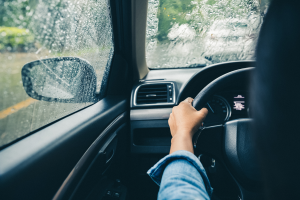 Know The Ohio Headlights Rule That Applies In Rain
One of the simplest rain safety steps is also an Ohio legal requirement: if your windshield wipers are in use because of precipitation, your vehicle must display the required lights and illuminating devices. The Ohio Driver Manual reinforces the same concept: use headlights when visibility is poor (including rain) and when wipers are in use due to precipitation.
This is practical safety, not just compliance. In heavy rain, many crashes start with “I didn’t see them.” Headlights and taillights help drivers judge your position and speed through spray and gray skies. Turn on your full headlights (not just daytime running lights), because taillights may not be on with DRLs (Daytime Running Lights).
Daytime Running Lights (DRL) are low-intensity front lights that automatically turn on when your vehicle is running during the day.
Why That Matters in Heavy Rain
- DRLs usually only turn on the front lights
- Taillights often do NOT turn on with DRLs
- In heavy rain, drivers behind you may not see you clearly if your rear lights aren’t on
Also, avoid high beams in heavy rain or dense spray because they can reflect back and make visibility worse.
Slow Down Early, Not Late
A common mistake in heavy rain is waiting until you feel the car slide to adjust your speed. Ohio’s Driver Manual advises drivers to reduce speed at the first sign of rain because wet pavement reduces grip, increases stopping distance, and makes turning harder without skidding. “Driving the speed limit” can still be too fast if the road is wet, visibility is limited, or water is pooling in the lane. Your safe speed is the speed that lets you stop and steer within the space you can clearly see ahead.
A simple mental shift helps: in heavy rain, you are not trying to maintain your normal pace, you are trying to maintain control. Control comes from smooth inputs and time to react, and time comes from going slower.
Increase Following Distance And Build A Bigger “Space Cushion”
Heavy rain is a space-management problem. The less traction you have, the more space you need to stop and steer. The Ohio Driver Manual teaches a baseline following distance of four seconds and specifically says to increase following distance when weather limits visibility (including rain) and on slippery roads. In heavy rain, think in terms of adding space in every direction: more room in front, more room to the sides, and less time spent driving in other drivers’ blind spots.
Use a simple method you can repeat anywhere: when the vehicle ahead passes a sign or pole, count “one-thousand-one…one-thousand-four.” If you reach the same point before finishing the count, you’re following too closely for normal conditions, and rain is not normal. The manual also notes that you should allow extra distance between you and the vehicle ahead when the road is wet.
Understand Hydroplaning And How To Get Control Back
Hydroplaning is one of the biggest risks in heavy rain because it can happen suddenly and feels like the steering “goes light.” The Ohio Driver Manual explains hydroplaning as when the steering tires start to ride on top of pooled water, similar to water skis. The manual’s best prevention is straightforward: slow down when driving in rain, especially when the road is wet with pooled water or puddles.
If hydroplaning happens, the Ohio Driver Manual advises easing your foot off the gas pedal slowly. Keep your steering steady and look where you want the car to go, not at the water you’re trying to avoid. Avoid sudden braking or sharp steering, because those inputs can make a slide worse when your tires are trying to regain contact with the road. Once traction returns, continue at a slower speed and consider moving away from the deepest tracks where water collects.
Choose Lanes And Lane Position With Water In Mind
In heavy rain, the “best” lane is often the lane with the least standing water and the best visibility. Water tends to collect in low spots, near the edges of the road, and in worn ruts where tires have repeatedly traveled. If you can safely do so, avoid driving directly in deep ruts filled with water. Sometimes moving slightly within your lane (not drifting) can help you stay on the higher part of the pavement where water is thinner.
Also watch the road surface ahead, not just the vehicle ahead. If you see repeated splashes or a glossy “sheet” look across the lane, that’s a clue water is pooling. Plan early instead of making last-second lane changes, because sudden steering in rain is a common trigger for loss of control.
Brake And Turn Smoothly, And Give Yourself Extra Time
Wet roads increase stopping distance, and heavy rain makes it harder to judge exactly how quickly traffic is slowing. Ohio’s Driver Manual notes that when the roadway is slippery it will take longer to stop, and it will be harder to turn without skidding. The solution is smooth, early braking and gradual steering. Start slowing down earlier than you normally would, especially approaching intersections, highway exits, and curves.
If your vehicle begins to slide, the Ohio Driver Manual advises easing off the gas pedal and gently applying the brake. If you have ABS (most modern vehicles do), keep steady pressure on the brake rather than pumping. If you don’t have ABS, gentle braking and steering straight can help you regain traction. Either way, abrupt “panic inputs” are what turn a manageable skid into a spin.
Be Careful Around Large Vehicles And Spray
Trucks and buses create heavy spray that can briefly blind you, especially when you’re beside them or when they pass you. Ohio’s Driver Manual specifically lists following large vehicles like trucks and buses as a situation where you should increase your following distance. In heavy rain, that extra space also helps you avoid the worst of the spray and gives you more time to react if the truck throws water across your windshield.
When you do pass a large vehicle, pass decisively when it is safe, then give them space again after you’re clear. Avoid lingering beside the trailer where visibility is worst and escape options are limited. If spray suddenly overwhelms your windshield, don’t slam the brakes. Hold your lane, ease off the accelerator, and let your vision return.
Use Signals Earlier And Make Your Intentions Obvious
In heavy rain, other drivers have less time to interpret what you’re doing, so communicate sooner. Signal earlier for lane changes and turns, and avoid “surprise braking.” If traffic is bunching up, tap your brakes earlier (without riding them) so drivers behind you have a clearer cue that speeds are dropping. The Ohio Driver Manual emphasizes that it’s your responsibility to make your vehicle visible and to use headlights in poor visibility conditions like rain.
Avoid Cruise Control In Heavy Rain
Cruise control can keep a steady speed, but it can also keep you on the throttle at the exact moment you need to adjust because of pooling water, changing traction, or slowing traffic. In heavy rain, you want immediate, precise control of speed with minimal delay. If your car begins to hydroplane while cruise is engaged, the system may try to maintain speed when you need to back off. Keeping your foot on the pedal helps you respond faster and more smoothly.
Treat Standing Water And Flooded Roads As A Hard No
Not all water on the road is equal. A shallow puddle can still trigger hydroplaning, and deeper water can hide hazards like potholes, debris, or missing pavement edge. The Ohio Driver Manual is direct: do not drive through large bodies of standing water on a road, and if you see a flooded roadway, find another route.
The National Weather Service’s “Turn Around Don’t Drown” guidance is even more blunt: never drive around barricades blocking a flooded road, and floodwater can be dangerous even when it looks shallow. If water is covering the roadway and you can’t clearly see the pavement markings, the shoulder, or the depth, the safest decision is to turn around and choose another route. There is no appointment, errand, or shortcut worth gambling on unknown water depth and unseen road damage.
If Visibility Drops Too Far, Pull Over The Right Way
Sometimes rain becomes so intense that you can’t safely continue. If visibility drops to the point you can’t see lane markings or the vehicle ahead, it may be time to pull over. Do it deliberately: signal, move to a safe location well off the travel lane (a parking lot is better than the shoulder), and keep your headlights on so you remain visible.
If you must stop on the shoulder, get as far from traffic as possible and stay buckled. Heavy rain increases the chance another driver is struggling with visibility or traction, and the last place you want to be is partially in a travel lane. If you use hazard lights, do so only when you are stopped or moving very slowly due to a hazard, and make sure you’re not giving mixed signals to drivers trying to interpret your movement.
 Watch For The “After The Downpour” Hazards
When rain starts to let up, drivers often speed up too quickly. That’s when crashes happen because roads can still be slick, water can still pool in shaded areas, and visibility can still be compromised by lingering spray. Also, heavy rain can uncover potholes, wash gravel onto rural roads, and make painted lines extra slippery. Keep the same habits for a few miles after conditions look “better”: steady speed, extra following distance, and smooth braking.
Ohio Drivers: Drive Safely In Heavy Rain
Most drivers learn “slow down and leave space,” but heavy rain demands you apply those basics consistently and correctly. The Ohio Driver Manual specifically calls out slowing down at the first sign of rain, allowing extra distance on wet roads, understanding hydroplaning and how to respond, and avoiding flooded roadways. A refresher on modern defensive driving habits can help you make better decisions before a storm forces them.
Contact Us Today!
Online Two Point Driving Classes, we are an Independence, Ohio-based company dedicated to driver improvement and remedial driving classes. If you’re eligible and looking to earn credit points through a two-point credit while sharpening real-world safety skills that matter in Ohio weather, the goal is the same as the advice above: stay current, stay intentional, and drive with a plan instead of reacting at the last second.
Common FAQs on How to Drive Safely In Heavy Rain
1. When Heavy Rain Starts In Ohio, What Is The First Thing I Should Do While Driving?
Slow down early and turn on your headlights so you can see better and other drivers can see you, especially when your wipers are in use.
2. Why Is Driving The Posted Speed Limit Sometimes Unsafe In Heavy Rain?
Because wet pavement lowers traction and increases stopping distance, and heavy rain reduces how far ahead you can see, so a “normal” speed can be too fast for the conditions.
3. How Much Following Distance Should I Leave In Heavy Rain?
Use a larger space cushion than normal; a practical method is the four-second following-distance count as a baseline, then add more time when rain is heavy, visibility is poor, or the road is slick.
4. What Is Hydroplaning And What Does It Feel Like?
Hydroplaning happens when your tires ride on top of pooled water instead of gripping the pavement, and it can feel like steering suddenly gets light or the vehicle stops responding normally.
5. What Should I Do If My Car Starts To Hydroplane In Heavy Rain?
Ease off the accelerator smoothly, keep your steering steady, and avoid sudden braking or sharp turns until the tires regain traction.
6. Why Should I Avoid Cruise Control During Heavy Rain?
Because you need immediate control of speed when traction changes, water pools in the lane, or traffic slows suddenly, and cruise control can delay or complicate quick adjustments.
7. How Should I Handle Standing Water Or A Flooded Roadway In Ohio?
Do not drive through large standing water or flooded roads; if you can’t clearly judge depth or see pavement markings, choose a different route and do not drive around barricades.
8. What Is The Safest Way To Deal With Low Visibility From Spray Or A Sudden Downpour?
Hold your lane, slow down gradually, increase your following distance, and if visibility becomes too limited to continue safely, pull off the road to a safe location when you can.
9. How Do Large Trucks Change The Risk In Heavy Rain?
They create heavy spray that can briefly block your view, so you should increase following distance, avoid lingering beside them, and pass only when it’s safe and you can clear the spray zone.
10. What Vehicle Equipment Should I Check Before Driving In Heavy Rain?
Make sure your wipers clear the windshield properly, washer fluid works, headlights/taillights are functioning, and tires have adequate tread and correct pressure so you can maintain visibility and traction.

Jim Trakas is a licensed instructor with the Ohio Department of Public Safety’s Driver Training Program. He has a distinguished history of public service, including his role as a former member of the Ohio House of Representatives and current Councilperson at Large for the City of Independence.
As the founder and owner of the American Online Learning Center, Jim has been providing comprehensive behavioral corrective programming since 2014, helping individuals achieve meaningful personal growth and development.
Jim’s commitment to service extends to his military background, where he has earned several prestigious honors. He was awarded the Ohio Commendation Medal by the Ohio Army National Guard and the Pandemic Campaign Medal by the United States Public Health Service. Additionally, he is an Honor Graduate of the Ohio Military Reserve Training Academy’s Officer Candidate School and a two-time recipient of the Military Proficiency Award, as well as the Military Achievement Award.