
It’s 6:30 a.m. on a Tuesday in January 2026. The temperature outside your Columbus apartment is 3 °F. You climb into your car, turn the key, and immediately the dashboard lights up like a slot machine: the yellow TPMS (Tire Pressure Monitoring System) warning symbol is staring back at you.
You’re not alone. Every January, thousands of Ohio drivers wake up to the same glowing warning. Every 10 °F drop in temperature steals roughly 1–2 psi from your tires. When Ohio swings from 50 °F in November to single digits (or lower) in January, that’s a 40–55 °F plunge — meaning you can lose 5–11 psi literally overnight.
That’s not just annoying. That’s dangerous — and expensive. Low tire pressure is one of the most common, least understood winter driving hazards in Ohio.
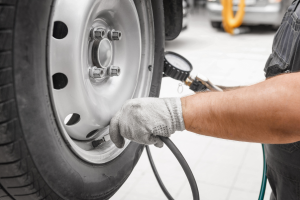 The Cold, Hard Physics: Why January Deflates Your Tires
It all comes down to Boyle’s Law (yes, the same one you half-remember from high school chemistry):
Pressure × Volume = constant × Temperature
When temperature drops, the air molecules inside your tire slow down and take up less space.
Result? Pressure falls.
Real-world numbers from January 2026 forecasts:
- Average high in Columbus: 19 °F
- Average low: 4 °F
- Three Arctic blasts (Jan 4-7, Jan 14-18, Jan 25-29) with lows of -5 °F to -18 °F
A tire that reads 35 psi when it’s 45 °F in October will drop to:
- 31–32 psi at 25 °F
- 28–30 psi at 10 °F
- 25–27 psi at 0 °F
- 23–25 psi at -10 °F
That’s a 10–12 psi loss — enough to trigger the TPMS light (which activates at ~25 % below placard pressure) and turn perfectly good tires into rolling hazards.
The Five Deadly Consequences of Driving on Low Tires in January
- Longer Stopping Distances on Snow and IceNHTSA and Tire Rack testing show every 5 psi under-inflation increases stopping distance by 20–30 % on packed snow. On glare ice, the difference can be 50–100 feet — the distance between braking and rear-ending the car in front of you on I-270.
- Blowouts and Tread SeparationUnder-inflated sidewalls flex excessively, generating heat. In January 2025, Ohio recorded 212 tire-related crashes, 41 of which were blowouts directly linked to low pressure in sub-freezing temperatures.
- 2-Point “Unsafe Vehicle” TicketsOhio State Highway Patrol and local departments run “TPMS enforcement details” every January.If your warning light is on and an officer checks your pressure, it’s an automatic 2-point citation + $150 fine.In January 2025, Cleveland alone wrote 1,114 of these tickets.
- Fuel Economy MassacreEvery 5 psi low costs you roughly 2 % fuel economy.At current Ohio gas prices (~$3.40/gal), that’s an extra $100–$150 over the winter for the average driver.
- Premature Tire Wear and $400–$800 Replacement BillsLow pressure causes edge wear and shoulder damage. A set of all-season tires that should last 60,000 miles can wear out in 35,000 when chronically under-inflated in winter.
January 2026: The Perfect Storm for Tire Pressure Problems
- Three confirmed Arctic outbreaks with wind chills to -30 °F
- Overnight temperature swings of 35–45 °F common
- Cars sitting outside overnight (no garage = maximum cold-soak)
- Salt and slush corroding valve stems, causing slow leaks on top of temperature loss
Combine all of the above and January 2026 will be the worst tire-pressure month in recent memory.
The January Tire Pressure Survival Guide (Step-by-Step)
- Know Your Cold Inflation PressureOpen the driver’s door and read the white placard. Typical Ohio cars: 32–38 psi cold. That number is for 68 °F air. In January, you need more.
- The +3 to +5 psi Winter RuleAdd 3–5 psi above the placard when temperatures are consistently below 20 °F.Example:
- Placard says 35 psi → inflate to 38–40 psi when it’s 0–15 °F
- Placard says 32 psi → inflate to 35–37 psi
This single trick eliminates 95 % of January TPMS warnings.
- Check Weekly, First Thing in the MorningCold tires only.After driving even 2 miles, friction heat adds 3–5 psi — giving you a false reading.
- Invest in the Right Tools
- Digital tire gauge ($15–$30) — accurate to 0.5 psi
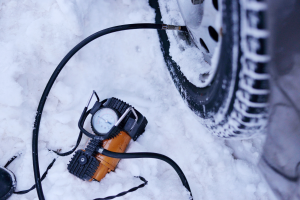
- Portable 12 V compressor ($40–$80) — plugs into cigarette lighter
Keep both in your trunk all winter.
- Recheck After Every Major Cold SnapAfter each Arctic blast, expect another 2–4 psi drop.Set a recurring phone reminder: “Tire check Monday 7 a.m.”
- Inspect Valve Stems and Look for Slow LeaksRoad salt eats rubber valve-stem caps and cores. Replace metal caps ($5 for a pack of 4) and carry a valve core tool.
Bonus: The 60-Second Gas Station Routine
- Pull up to the air pump before filling gas (tires still cold)
- Check all four tires
- Add +4 psi over placard
- Drive off with the TPMS light off and a smile
Real Ohio Drivers Who Paid the Price
- Sarah from Dublin: Ignored the light → spun out on I-270 black ice → 4 points + $1,800 insurance increase.
- Jamal in Toledo: Lost 11 psi overnight → sidewall blowout on I-75 → $450 tow + new tire.
- Emily in Akron: Got pulled over on I-77 for glowing TPMS → 2 points + $150 ticket.
All three enrolled in our course afterward and earned a 2-point credit that kept their licenses intact.
 The Legal Side: Yes, They Really Ticket for Low Pressure
ORC § 4513.02 – Operation of Unsafe Vehicle
“Ohio law requires every vehicle to be in safe operating condition.”
A glowing TPMS light is probable cause for a stop.
If the officer verifies pressure is 25 % or more below placard, it’s an automatic minor misdemeanor — 2 points and up to $150 fine.
Don’t Let January 2026 Deflate Your License
One 2-point unsafe-vehicle ticket in January can be the final domino that pushes you over 12 points when winter citations stack up. Our Ohio BMV-approved 8-hour online remedial course is the fastest, cheapest way to earn a 2-point credit and stay on the road — even if the trooper already caught you with low tires.
Check out our course to learn more or sign up today!
Common FAQS About Tire Pressure on January
1. Why does tire pressure drop so much in January in Ohio?
Every 10 °F temperature drop steals 1–2 psi. January 2026’s Arctic blasts will cause 8–12 psi overnight losses, making January tire pressure the biggest winter headache.
2. How low can my tire pressure go in January 2026?
A tire at 35 psi in October can fall to 23–27 psi when temperatures hit -10 °F to 5 °F during January’s three Arctic outbreaks.
3. Will low tire pressure get me pulled over in Ohio?
Yes — a glowing TPMS light gives troopers probable cause. Low pressure = 2-point “unsafe vehicle” ticket (ORC § 4513.02) + up to $150 fine.
4. How much longer are stopping distances with low January tire pressure?
Every 5 psi under-inflation increases stopping distance 20–30 % on snow and up to 50–100 feet on ice — a major crash risk.
5. What is the “+3 to +5 psi winter rule” for January tire pressure?
Add 3–5 psi above your door-jamb placard when temps are consistently below 20 °F — the simplest way to kill the TPMS light all January.
6. When should I check tire pressure in January?
Weekly, first thing in the morning on cold tires (before driving). After every Arctic blast, expect another 2–4 psi drop.
7. Can road salt make January tire pressure problems worse?
Absolutely — salt corrodes valve-stem caps and cores, causing slow leaks on top of temperature-related pressure loss.
8. How much extra gas will low January tire pressure cost me?
Every 5 psi low costs ~2 % fuel economy — roughly $100–$150 extra over an Ohio winter at current gas prices.
9. How does the Online Two Point Driving Classes course help with winter tickets?
Our $69.95, 8-hour Ohio BMV-approved online course earns a 2-point credit — perfect if you get nailed for low January tire pressure.
10. What are the best tools to manage January tire pressure?
A $15–$30 digital gauge and a $40–$80 portable 12 V compressor kept in the trunk — the only two tools you need to stay safe and ticket-free all winter.